Case study 01 · ra.co & RA Guide
Closing the loop between music discovery, following artists and event going for ravers
Research-led product improvement
Background
Project Next
Early 2025, we completed an extensive user research project on our customers named ‘Project Next’.
The goal was to understand Gen Z behaviours on event attendance and music discovery, and to understand where we sit as a brand and product to a younger audience. ‘Project Next’ produced three strategy documents based on what was found:
- Make following a driver of event attendance
- Reduce friction in event discovery
- Make RA the hub of Music & Event discovery
The focus
Make following a driver of event attendance
Based on the insights from the three strategy documents, we selected the one where we could identify opportunities without requiring a large discovery phase or significant dev resource.
Making following a key driver of event attendance was chosen as the focus for this project.
What we had heard
Following is fragmented, under-utilised, and lacks clear value
Following artists is a contributing factor for users to discover events, but today the journey is fragmented, under-utilised, and lacks clear value.
- The value of following an artist isn't clear to users
- Artist pages are a key entry point into RA for many users
- Finding out about events too late was one of the biggest pain points raised by participants
The process
An audit of ra.co
Our team of three completed an audit of ra.co, using the strategy document as guardrails to isolate any parts of the experience where ‘following’ is fragmented and lacks clear value.
The challenge
Dev resource was tight — so the question became: how can we implement the smallest updates to track and experiment with?
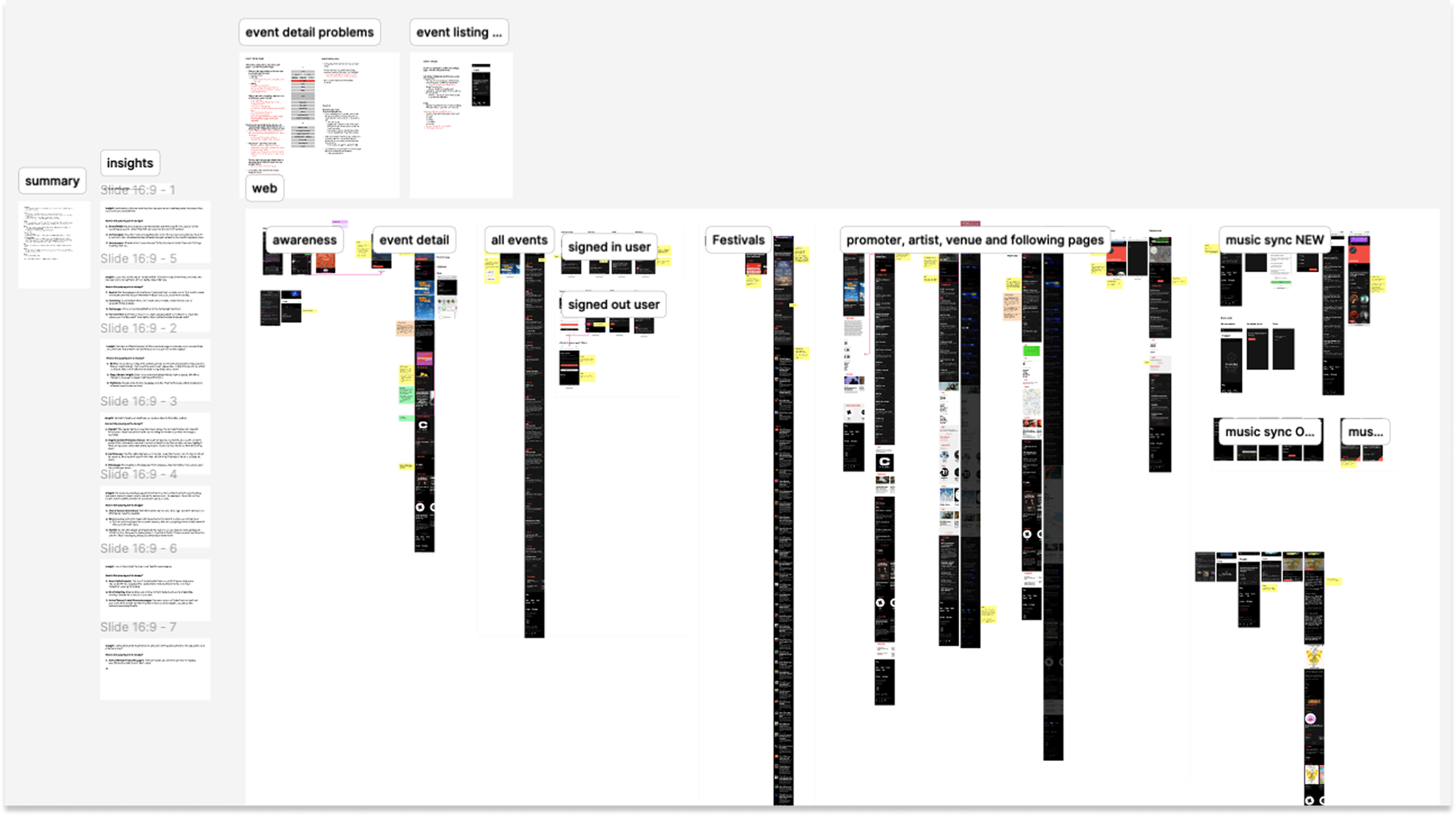
ra.co audit — mapping the full experience to isolate where “following” is fragmented
Three small, trackable solutions
What we shipped
Solution 01
Move the follow button on profile pages
What is the problem?
The ‘Follow’ button currently sits below the fold on profile pages, signalling to users that it is a secondary action.
We wanted to test a higher placement paired with value-driven copy — explaining the benefits of following — to determine if these changes drive higher engagement.
Confirmed under 3 dev points
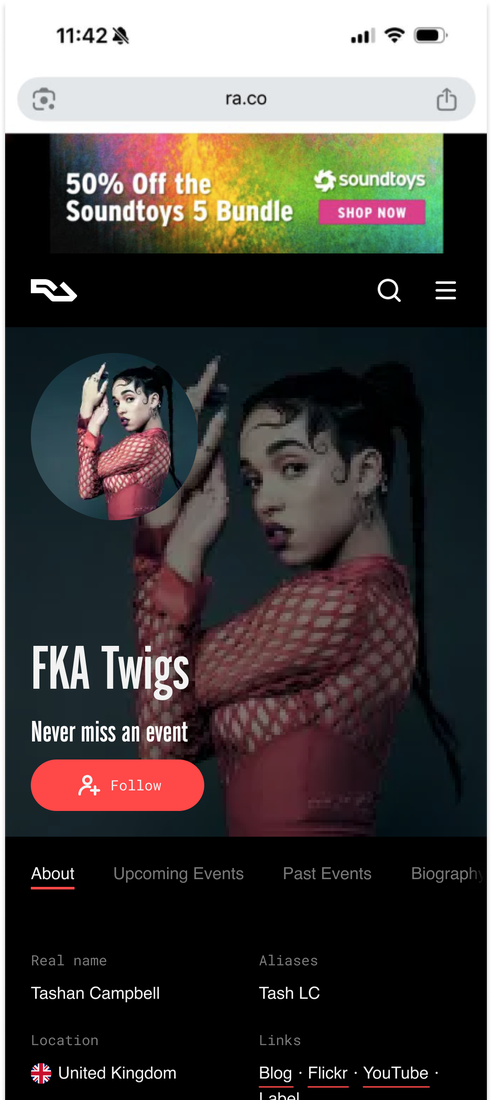
Proposed — follow moved above the fold with value-driven copy
Solution 02
Update the ticket confirmation page
What is the problem?
Our ticket confirmation page functions as an end point rather than a gateway to further engagement. We should transition users back into RA — prompting them to follow artists, venues and promoters they've just bought tickets for.
What logic do we need?
Display a maximum of six profile cards recommending profiles the user does not currently follow:
- Artists — the top 4 recommended artists
- Venues — the venue
- Promoters — the top recommended promoter (if multiple are available)
A bit over 3 points — following checks needed
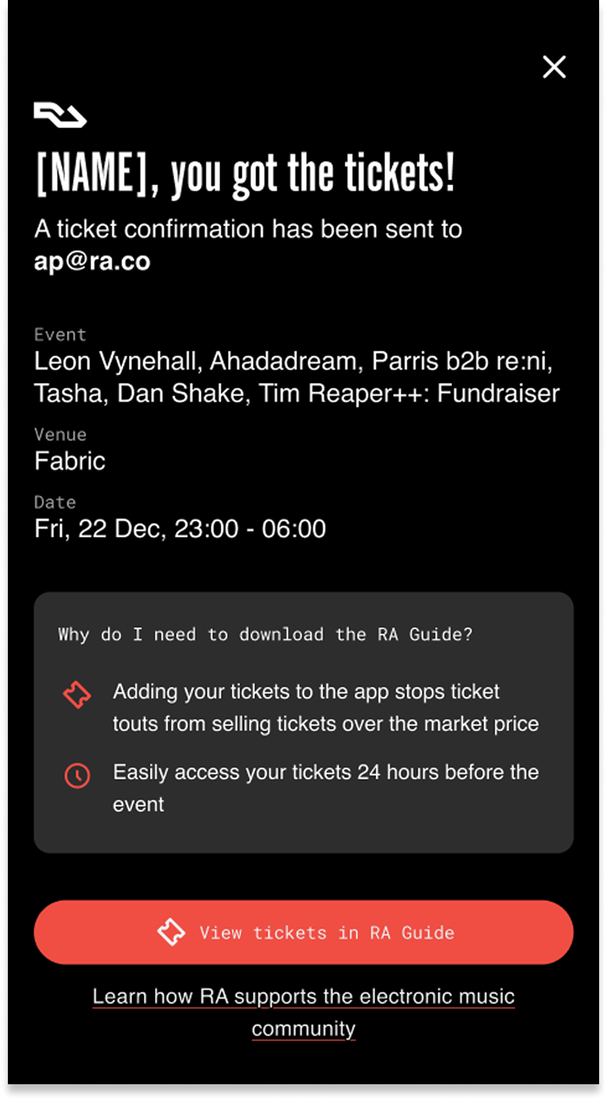
Current — no post-checkout engagement
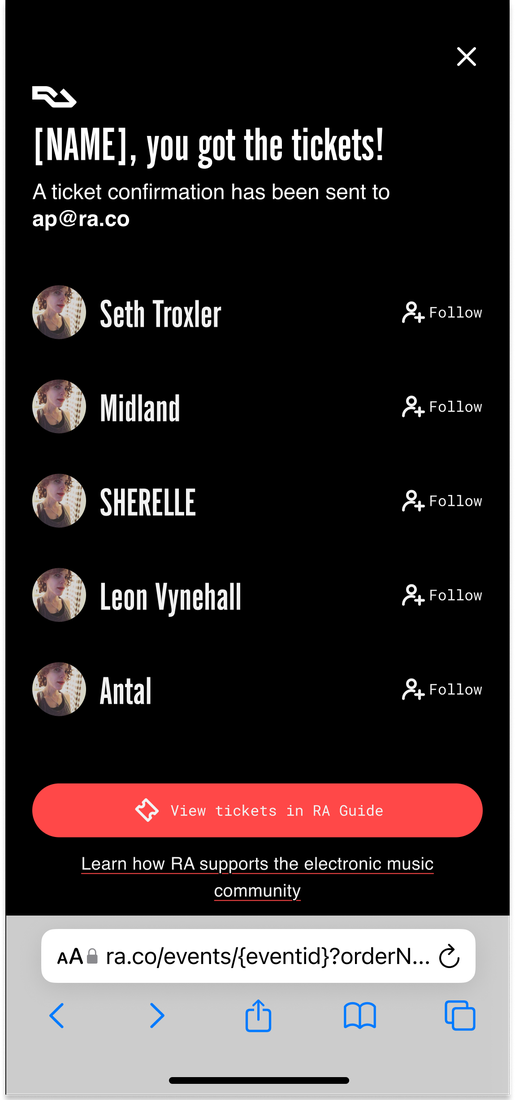
Proposed — suggested profiles to follow
Solution 03
Provide suggestions on ‘For you’ and ‘New’
What is the problem?
When logged-in users land on an empty For You or New page without following any artists, they're met with an empty state that doesn't help them understand how to follow artists or where to discover them.
What logic do we need?
- Suggest artists active in the user's current location
- Feature handpicked artist recommendations (RA picks) first
- If no local suggestions are available, show 5 random eligible artists from the top 1,000 popular upcoming events globally
Approximately 3 points
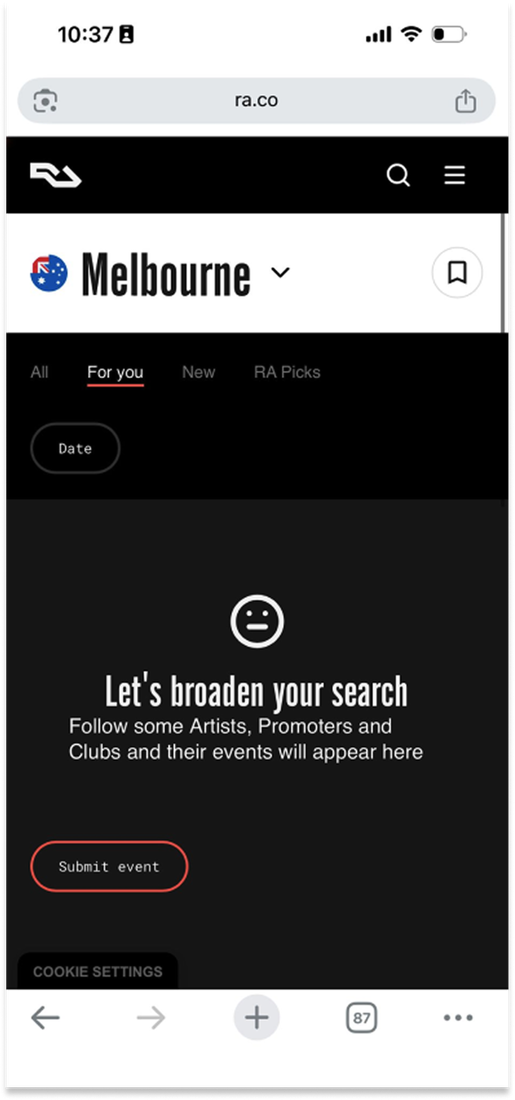
Current — an unhelpful empty state
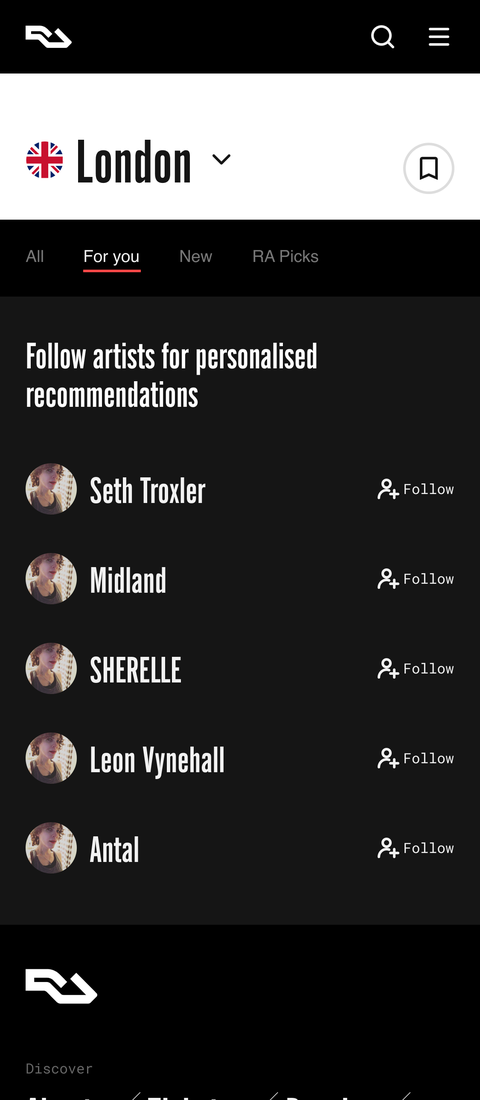
Proposed — follow suggestions bridge the awareness gap
Outcome
uplift in artist follows in the first week
This was a real win for the design team. Following the launch of the above-the-fold follow button, we saw a 6% uplift in artist follows in the first week. Ongoing measurement has been difficult due to limitations with our data.
All three solutions were eventually successfully implemented across web and app, thanks to our annual Hack Week, where the designs were picked up and brought to life by the wider team.
This small product improvement project was seen company-wide as successful in developing features that slowly make the website better — so we decided to repeat this project for our Promoter tools platform.
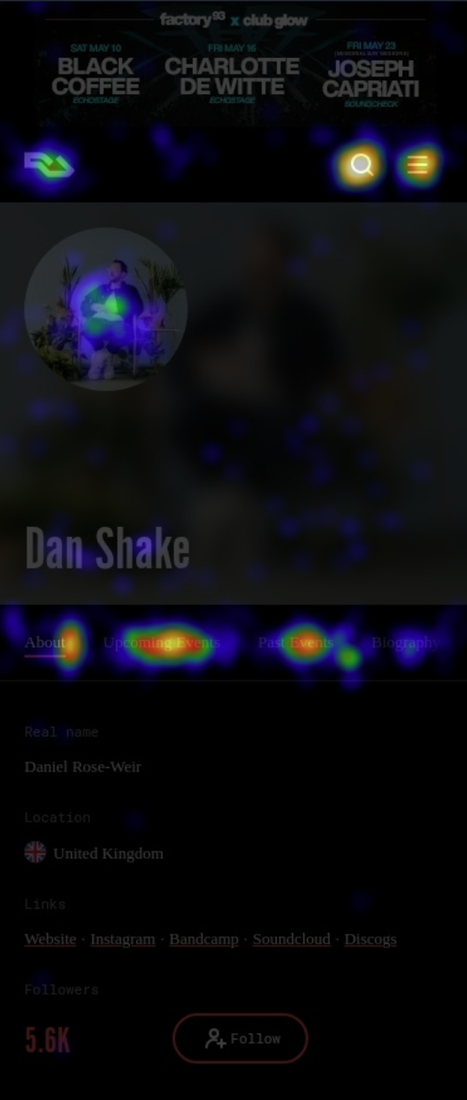
Heatmap — engagement on the relocated follow button
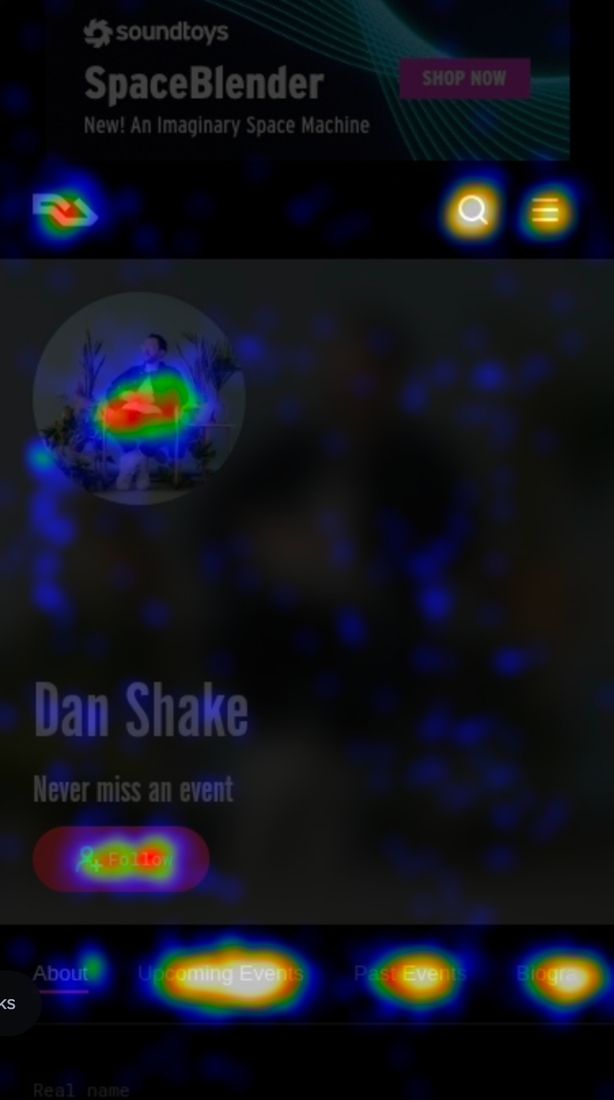
Heatmap — activity across the artist profile
The final experience
Following, live in the RA Guide app
Following artists across discovery, profiles and the ‘For you’ feed
Reflection
What I would do differently
-
Make sure the thing we are measuring is stable
We relied on pre/post testing because we didn't have enough resource to split users into test groups. After launch, we found our data wasn't stable enough to confidently measure impact.
We used ‘Just Announced’ notification sends as a proxy for increased follows, but sends were down year-on-year, likely due to fewer events. Changes were also only tracked in Metabase, so we couldn't attribute follows to a specific page or action — only observe the overall trend.
Ultimately, the day-to-day variance made it difficult to confidently attribute any change to the product.