
SOURCE
Helping promoters discover more diverse lineups
End-to-end product design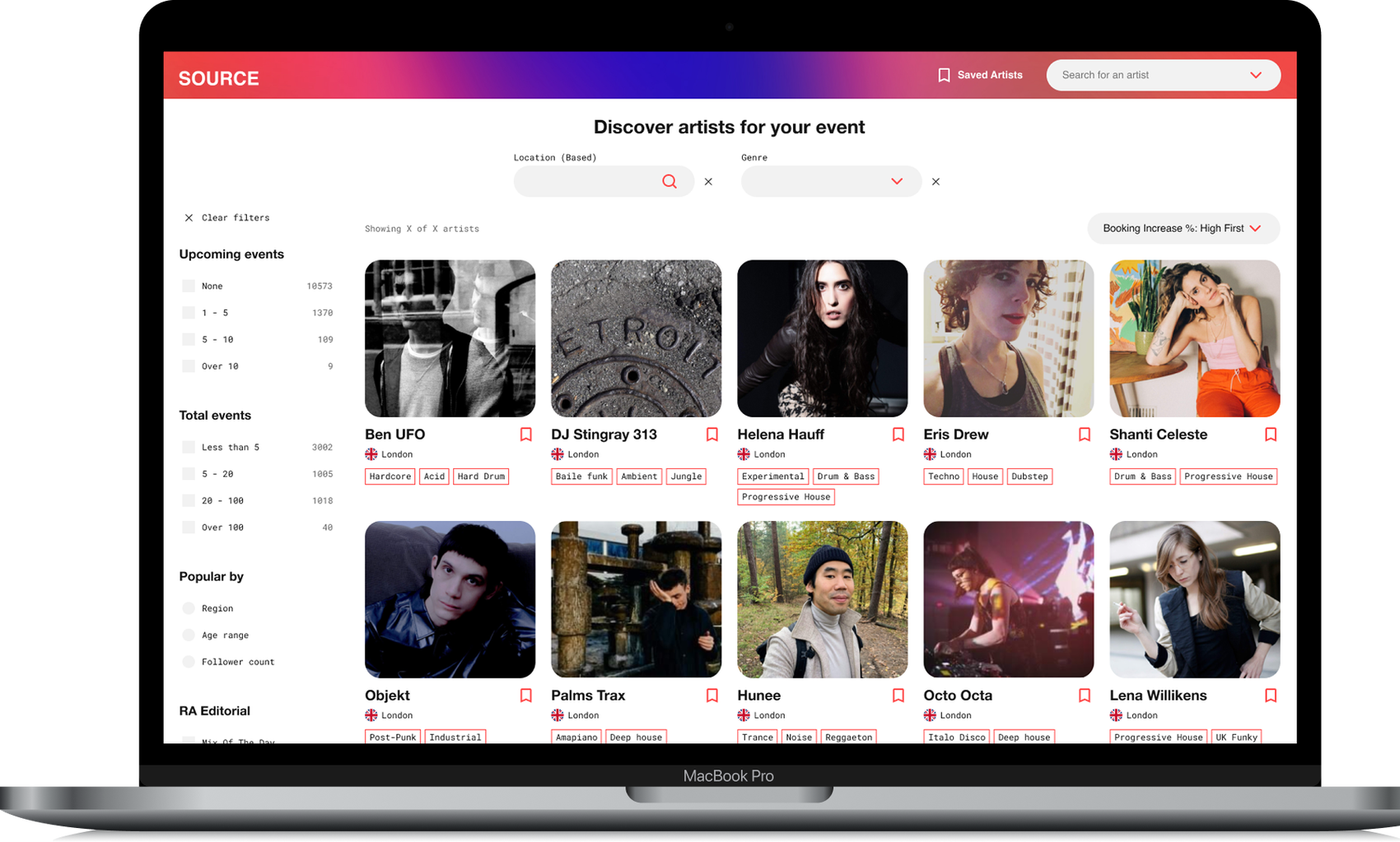
The context
20 years of music and event data
In 2023, Resident Advisor held the keys to an archive of over 20 years of music and event data. The catch was, it was sitting in our archives collecting dust.
I led a 10-month project to bring this data to life and put it in the hands of promoters to help them build their event lineups
My role
Where I came in
I joined the project as the lead designer when it was already in early production.
I led end-to-end design from Feb 2023 to Dec 2023, owning everything from initial research through to engineering handoff. I worked alongside a Product Manager, and 2 developers, as well as a Senior Designer for support.
With an ambitious OKR, a newly assembled engineering team and no established user base, my challenge was to turn a loosely defined concept into something we could actually launch.
The starting point
Who are our users?
Early on, I identified that we were moving into build without a clear problem definition or any user research.
The existing insights relied heavily on internal assumptions, specifically, team members leveraging their own experience as promoters.
To bridge this gap, I advocated for a temporary pause on developing to conduct user research.
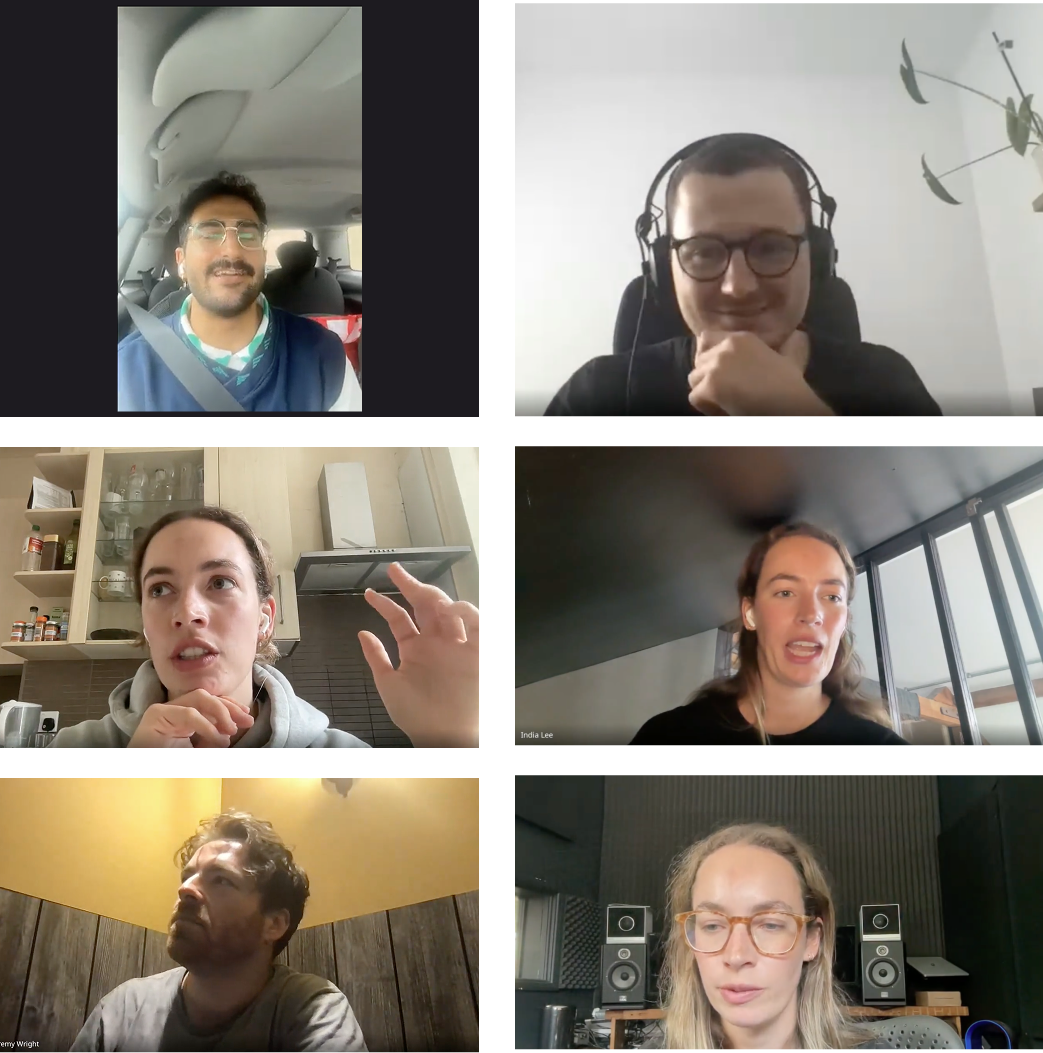
To ground our strategy in real user needs, I conducted six 60-minute, open-ended discovery interviews with external promoters.
Discovery & Insights
What does the event lifecycle look like?
I structured these sessions around the promoters broader workflows - focusing specifically on the artist discovery and booking lifecycle.
This allowed me to map their daily processes and pain points without introducing product bias.
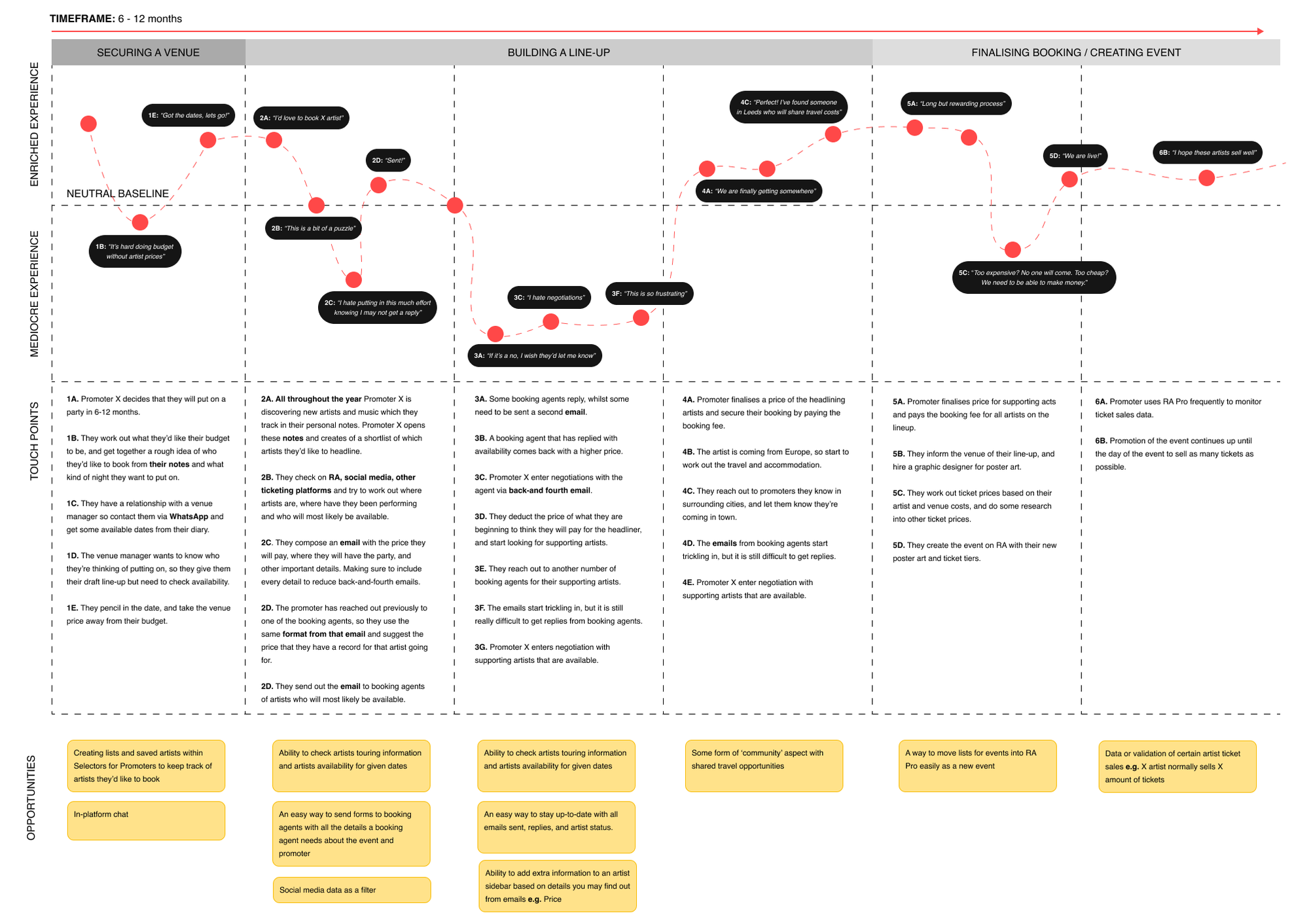
Promoter journey map, securing a venue → building a line-up → finalising the booking
Synthesis
What were the biggest pain points for promoters?
Putting on an event is a complex puzzle. Things are constantly changing; artists, budget, ticket prices, booking fees.
As the cost of booking artists continues to rise, prioritising the discovery of emerging talents has never been more crucial.
For smaller promoters, not having those key relationships makes it harder to book venues/artists.
The biggest pain point uncovered was the lack of responses from booking agents, leading to uncertainty regarding an artist's availability for booking.
🚩 Constraint
Getting time from promoters proved quite difficult. Therefore, we interviewed a majority of smaller promoters (1–5 events a year) as opposed to larger promoters (weekly events).
Alignment
Where did we want SOURCE to go?
To bridge user research with executive strategy, I facilitated a roadmap alignment workshop with key decision-makers to turn the qualitative insights into actionable product opportunities.
The session brought leadership together to evaluate these opportunities against core business goals, directly shaping and prioritising our strategic product roadmap. The outcomes were:
- Build a product that diversifies our revenue stream
- Eventually let SOURCE connect to RA Pro to build an event
- Use our event data to show availability
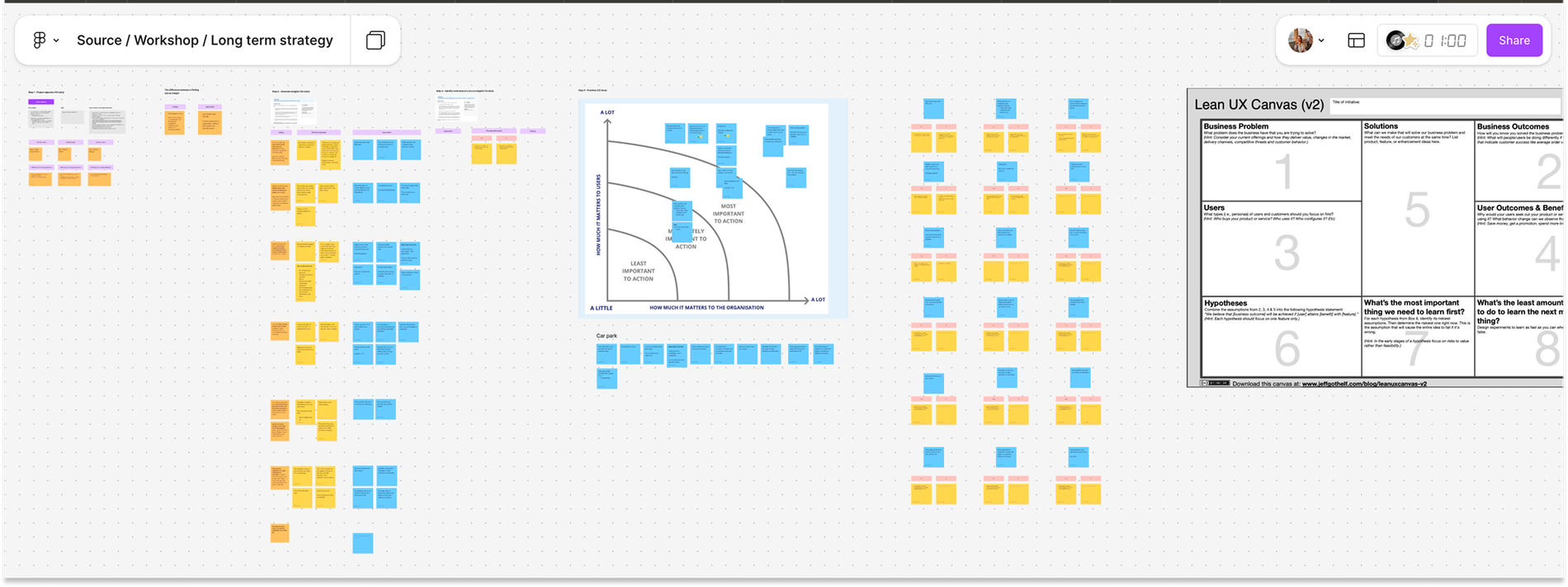
I borrowed a collaborative workshop framework developed by the NSW Department of Customer Service
⚠️ Learning
Stakeholders naturally jump straight to feature ideas when presented with user insights. Managing this momentum was a challenge. My role required repeatedly steering the team to stay anchored in the core user problem before committing to solutions.
Validation & ideation
Where are we showing up, and where should we?
I mapped promoter tasks and required support against RA's current feature set, colour-coding the gaps and overlaps to clearly visualise where our platform supports the user versus where product opportunities exist.
Why? I wanted to validate that our proposed opportunities represented genuine gaps in the current experience, and that they aligned with where promoters were actually showing up and what they needed.
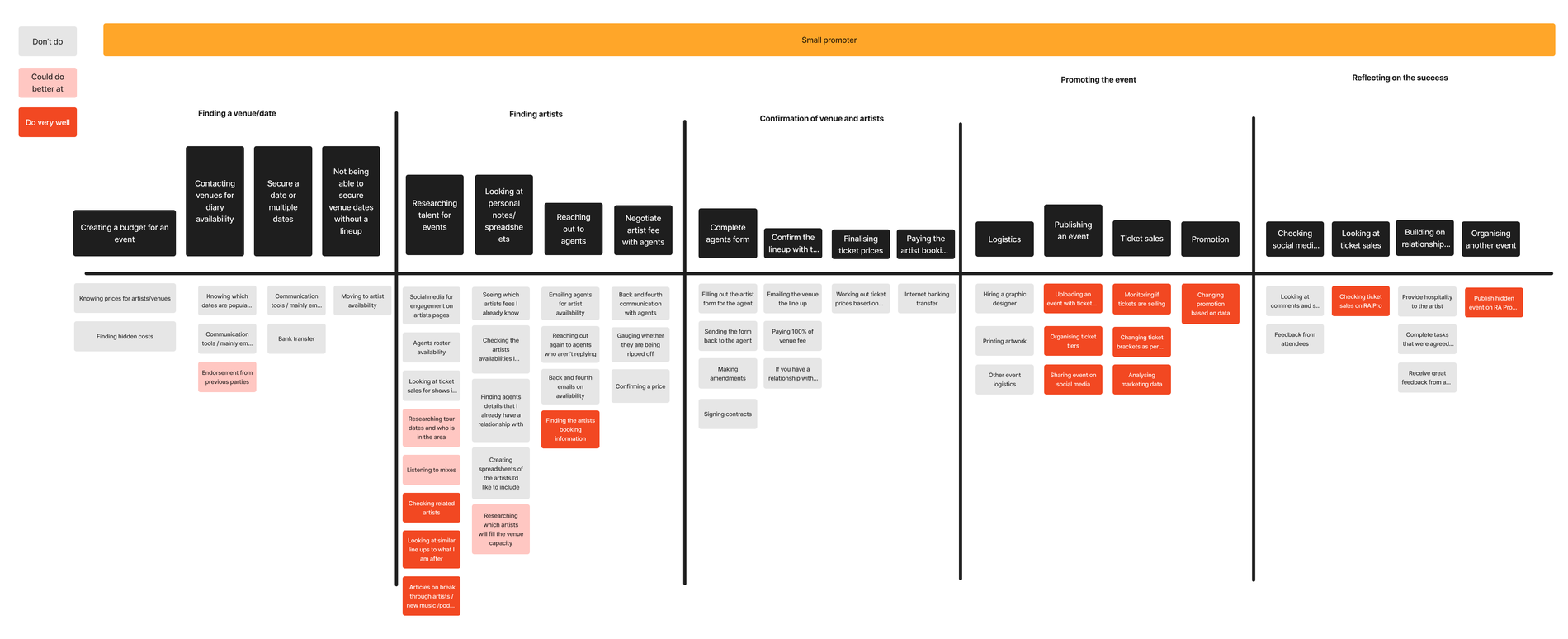
Mapping promoter touchpoints and support against RA's current feature set
The product
Different features, different stages of the event lifecycle
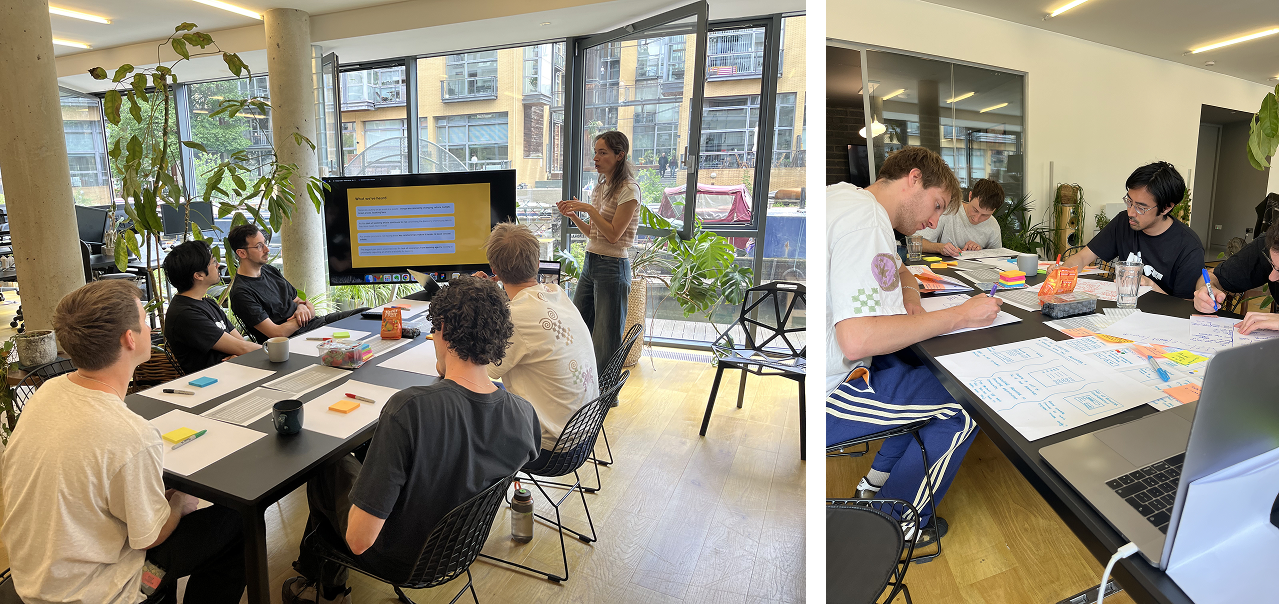
By aligning business strategy with user research, we identified clear opportunities to explore. I translated these into ‘How might we’ statements to guide a fast-paced ideation session.
I started by sharing the research findings to align the team on key challenges, then ran a round of Crazy Eights to encourage rapid idea generation.
We wrapped up with each participant presenting a refined ‘Big Idea’ based on their sketches.
- Filters & search
- Artist cards
- Artist sidebar
- Saving artists
- Saved artists & lists
- Planner mode
- Notifications
- Fee calculations
- Enquiry sent
- Making an offer
- Offer accepted
- Booking
Discover → Curate → Enquire → convert to an event in RA Pro.
Testing
The design process played out
We conducted multiple rounds of concept and product testing throughout development, using feedback to refine individual features and validate the product’s overall value.
A few key themes emerged consistently.
- Users felt SOURCE lacked sufficient social proof to confidently explore unfamiliar artists
- They saw value in using it to sense-check existing assumptions or discover additional context around an artist they were already considering
- We also saw regular use from our in-house agency, who used SOURCE to support their own artist research and discovery when building line-ups
This challenged our assumptions about our audience and their motivations for using SOURCE
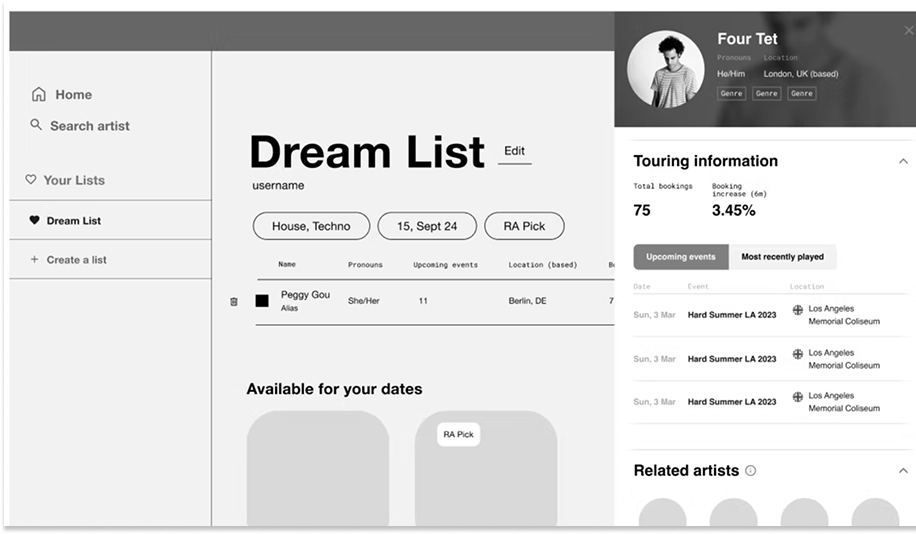
Concept testing, the ‘Dream List’ flow
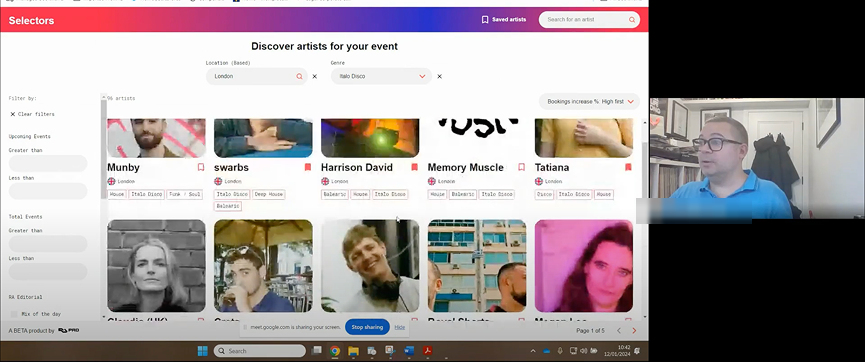
In-production testing as the BETA came together
Reflections & Insights
If you build it, they won’t come
The product evolved from an early concept into a working beta, launched at Amsterdam Dance Event.
However, we never felt confident we were solving a strong, validated user problem.
SOURCE was an executive-led initiative to diversify revenue, meaning we were often designing within an established business direction.
Without reliable access to marketing support, we also struggled to reach our target audience and build awareness of the product.
As a relatively junior UX Designer leading the project, I learned that good design alone isn’t enough. A successful product needs a validated user problem, alignment between business and user needs, and a clear strategy for reaching and engaging its intended audience.
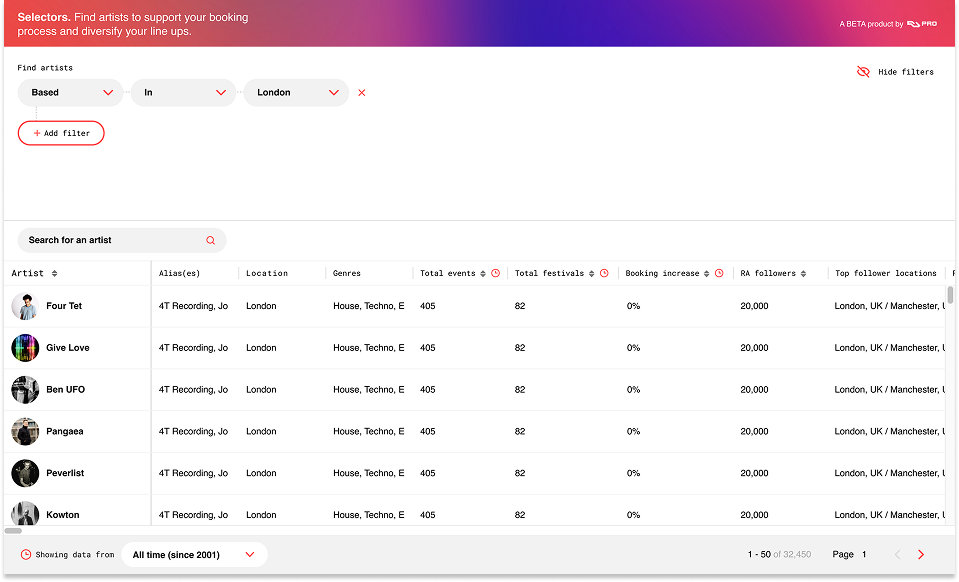
SOURCE, the launched BETA, discovering and curating artists